The United States has made some progress in restoring oil traffic through the Strait of Hormuz, but that development has not brought the war with Iran closer to an end.
Iran’s oil exports have fallen sharply, while shipments from other Gulf producers have increased. At the same time, fighting continues, diplomatic efforts remain stalled, and pressure on energy markets is growing.
The conflict began in February when the United States and Israel launched military action against Iran. The campaign was expected to last only a few weeks. Instead, the fighting has continued for months.
A June agreement briefly offered hope for a settlement, but it soon collapsed. Since then, there has been little evidence of meaningful diplomatic movement.
Oil Flows Through Hormuz Shift
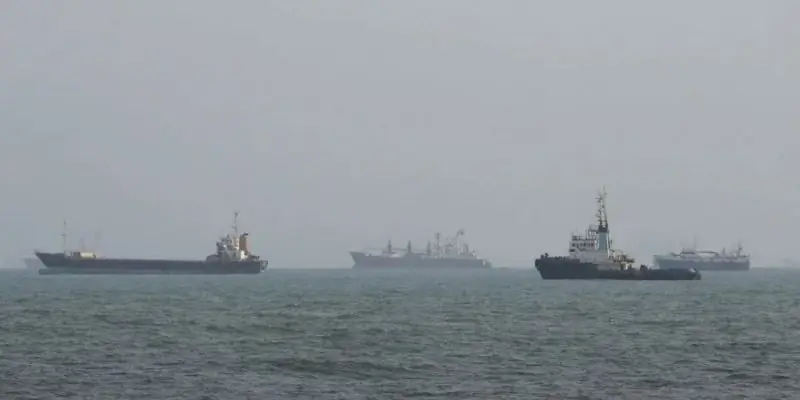
The Strait of Hormuz has remained one of the most important pressure points in the conflict. During peacetime, about one-fifth of the world’s traded oil and gas passes through the narrow waterway.
Iran used that position early in the war. It effectively shut the strait, creating a major disruption in global energy trade. At the same time, Iran continued selling much of its own oil, with China serving as its main destination.
That advantage has weakened in recent weeks. A U.S. blockade has nearly stopped Iran’s oil exports, while U.S. military operations have helped Gulf nations move larger volumes of oil through the strait.
Oil expert Homayoun Falakshahi of Kpler reported a steep change in export levels. Iran’s oil exports fell from about 1.85 million barrels per day last spring to roughly 255,000 barrels per day in August.
The change in non-Iranian oil flows has been just as striking. Exports rose from about 300,000 barrels per day during the height of the war to 8.4 million barrels per day in September. Alternative routes pushed the total to around 10.8 million barrels per day.
U.S. Energy Secretary Chris Wright cited similar figures on Sunday, saying, “we’re probably two-thirds or more of preconflict flows.” Before the war, non-Iranian exports stood near 14 million barrels per day, according to Falakshahi.
The Cost to the United States
The improved movement of oil has come with a significant military commitment. The United States has deployed large forces around the strait to keep commercial traffic moving. That effort has placed added pressure on military resources.
The war has already cost U.S. taxpayers more than $37.5 billion. Eighteen U.S. service members have also died. The financial and political burden could become more visible as the November congressional elections approach.
The conflict has also pushed energy prices higher. Brent crude, the global oil benchmark, climbed above $100 a barrel this week. Diesel prices reached a record level, adding pressure to transportation and farming costs.
Higher fuel prices can spread through the wider economy. Transport companies face larger operating expenses, while farmers rely heavily on diesel for equipment and other work. President Donald Trump has acknowledged that gasoline prices could remain high through the midterm elections.
Middle East specialist Mona Yacoubian of the Center for Strategic and International Studies said the United States has not achieved a clear victory despite progress around the strait and the severe damage to Iran’s economy.
“Unfortunately, the U.S. is not winning in the war with Iran despite its limited success in loosening Iran’s grip over the strait and the devastating impact on Iran’s economy,” Yacoubian said.
She added that Iran has shown no willingness to back down and has demonstrated that it can fight back and increase pressure when possible. In her assessment, the conflict could remain prolonged without a clear winner.
Iran Faces Pressure but Keeps Fighting
The blockade and new U.S. sanctions have placed Iran under growing economic strain. Prices have increased, and longer lines have appeared at gas stations.
Still, the pressure has not produced the political concessions Washington wants. Iran has not backed away from its position on the Strait of Hormuz, its disputed nuclear program, or its support for armed groups across the region.
Ali Vaez, an Iran expert at the International Crisis Group, described the central problem for Washington as the lack of a clear path to victory.
“Washington’s main problem is that it still lacks a theory of victory: More ships are getting through, and Iran is hurting, yet none of that has produced a political outcome,” Vaez said.
Iran has continued attacking ships in and around the strait. The United States has answered with limited strikes against Iranian coastal areas. Iran has then launched missile attacks against Arab states that host U.S. forces.
Trump recently referred to the conflict as “small potatoes.” Yet the military situation remains serious. U.S. supplies of advanced interceptors are under strain, which could create another opening for Iran to increase its attacks or rely more heavily on regional allies.
Houthis Add Pressure on Saudi Arabia
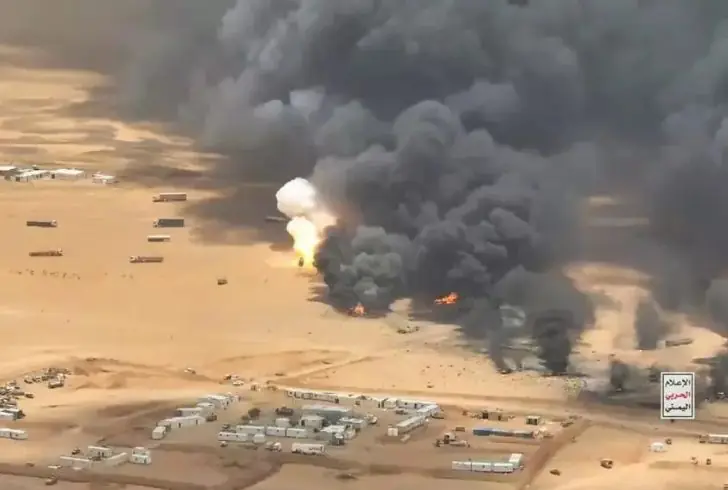
The conflict has also spread through Iran-backed groups in the region. The Houthis in Yemen have increased attacks on Saudi Arabia, adding fresh risks for energy markets and shipping.
The group has targeted Saudi oil facilities and shipping routes. The attacks affect the Bab el-Mandeb chokepoint, a major passage connecting the Red Sea with the Suez Canal.
Falakshahi said Houthi attacks damaged Saudi Arabia’s Jizan refinery, an important supplier of diesel and jet fuel to Europe.
Kpler data shows that Saudi oil shipments through Bab el-Mandeb toward Asia dropped sharply. The flow fell from about 3.4 million barrels per day in June to only 128,000 barrels per day in August. It recovered somewhat in September, reaching around 700,000 barrels per day.
The figures show how quickly regional fighting can affect energy supplies far beyond the immediate battlefield.
Danny Citrinowicz, a senior researcher at Israel’s Institute for National Security Studies and a former Israeli intelligence officer focused on Iran, said Tehran has repeatedly signaled that rising U.S. pressure could lead to greater escalation.
“Tehran has repeatedly signaled that it will respond to growing U.S. pressure by moving up the escalation ladder, not by backing down,” Citrinowicz wrote on X.
He also argued that Iran is unlikely to accept an indefinite maritime blockade or allow Washington to impose increasing economic costs without responding.
What Comes Next
The Strait of Hormuz is moving closer to higher levels of oil traffic, but the broader conflict remains unsettled. Iran has suffered major economic losses, yet those losses have not forced its leadership to change course.
For the United States, keeping shipping routes open requires a costly military presence. For Iran, continued resistance carries serious economic risks. Meanwhile, attacks involving the Houthis have added another threat to oil supplies and global shipping.
The result is an unstable balance. Oil can move through alternative routes and the Strait of Hormuz in larger volumes, but military escalation could quickly disrupt those gains.
Without a new diplomatic agreement, the war remains a conflict with high economic costs, limited military progress, and no clear end in sight.